
Structure Long-Form Content for SEO Success
514 views
A 3,000-word article can have excellent research, strong writing, and dozens of relevant keywords—and still perform like a brick.
The usual problem isn't length. It's architecture.
A reader lands on the page, scrolls for five seconds, and can't tell where the answer is hiding. Google can crawl the text, but the article's relationships are muddy. Three sections repeat the same point using different headings. Internal links were added at the end because someone remembered SEO existed. I've seen this happen more times than I'd like to admit.
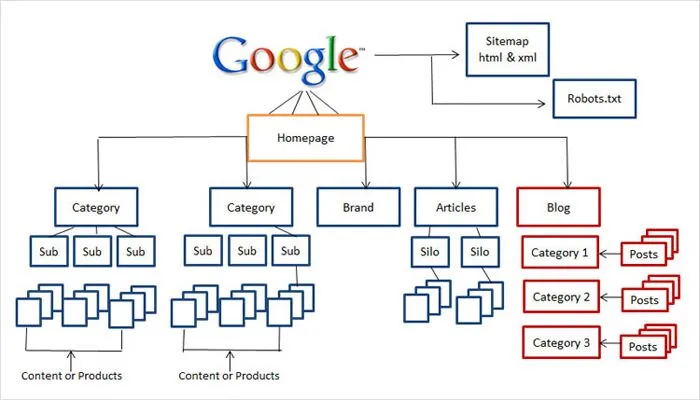
For an archive-driven knowledge site such as Wiki Archives, the challenge is slightly different from publishing a basic "use H2 and H3 headings" guide. The goal is to turn a long article into a useful node inside a larger information system.
That means thinking beyond word count.
Google's own documentation emphasizes logical organization, clear headings, useful internal links, descriptive anchor text, and original, people-first content rather than pages built primarily to attract search traffic.
This article takes the next step: how to architect long-form content so each section has a job, each internal link has a reason to exist, and the finished piece can support an entire topical library.
Stop Thinking of the Article as a Long Page
Think of it as a small information system.
A strong long-form article usually answers one large question, several necessary supporting questions, and a handful of objections or edge cases. Those pieces shouldn't simply be stacked in the order you discovered them during research.
That's how articles become bloated.
Instead, map the article into layers:
The primary answer — what the reader came to learn.
The supporting explanation — why the answer works.
The practical application — how to use it.
The exceptions — where the advice changes.
The next step — where the reader should go next.
That sequence sounds obvious. In practice, writers often scramble it.
A paragraph about schema appears before the reader understands the content model. A tool comparison interrupts the explanation of search intent. Then an FAQ repeats three answers already buried 1,500 words above.
Not quite.
Every major section should earn its place.
Before drafting, try writing a one-line purpose statement beside every planned H2. If you can't explain what unique question that section answers, merge it, move it, or cut it.
Length doesn't create depth. Distinct information does.
Build the H2 Structure From Questions, Not Keywords
Keyword research is still useful. Keyword stuffing a heading plan is not.
Suppose your primary topic is "content structure for SEO." A weak outline might look like this:
Content Structure for SEO
SEO Content Structure
How to Structure SEO Content
Best SEO Content Structure
Four headings. Nearly one idea.
A better architecture separates intent:
What problem is the reader trying to solve?
Maybe they want to know:
Why a detailed article isn't ranking.
How to organize a complicated topic.
Where subtopics belong.
How to avoid duplicate coverage across related posts.
How internal links should connect the finished article to older content.
Now the headings have different jobs.
Google advises publishers to organize content logically and use headings to help readers navigate well-structured text. Its guidance also stresses anticipating the language different searchers may use rather than trying to force every keyword variation onto the page.
The practical trick is simple: use keyword data to discover questions, then use information architecture to arrange the answers.
Use the "Answer, Explain, Expand" Rhythm
Long sections often lose readers because they delay the useful part.
Try this pattern instead.
Answer: State the point directly.
Explain: Give the reasoning, evidence, or technical context.
Expand: Add an example, exception, workflow, or consequence.
Imagine an H2 about internal linking:
Internal links should connect pages that genuinely extend the reader's current task, not act as a dumping ground for every article containing a vaguely related keyword.
That's the answer.
Then explain how crawlable links and relevant anchor text help users and search engines understand relationships between pages. Google specifically recommends logical site structures and concise, relevant anchor text; its developer guidance also says pages should be reachable through crawlable <a> elements.
Then expand with an example.
A Wiki Archives article explaining content clusters could link naturally to a deeper guide about internal linking, a technical article about structured data, and an editorial piece about avoiding duplicate content. A link to "best productivity apps" would be noise unless the current discussion genuinely needed it.
Small distinction. Huge difference.
Design Sections to Prevent Cannibalization
One of the messiest long-form SEO problems happens before the article is published.
The new piece accidentally competes with an old one.
Before writing, search your own domain for the topic and its closest variations. Google itself suggests using the site: operator to check indexed pages, while its SEO documentation recommends reducing duplicate content and maintaining a clear canonical version when substantially similar material appears under multiple URLs.
For example:
site:wikiarchives.com long-form content SEO
Don't stop at exact title matches. Look for overlapping promises.
If an existing article explains basic heading hierarchy, don't rewrite it with a different introduction. Position the new article around content architecture, topical relationships, or editorial systems for long-form pages.
That gives both pages room to breathe.
A quick planning table helps:
Existing content | New article should do |
|---|---|
Explains H1–H4 basics | Show how sections support different intents |
Covers keyword research | Explain how keyword clusters become an outline |
Discusses internal linking | Demonstrate link placement inside long-form architecture |
Introduces schema | Explain when structured data supports the page's main purpose |
The point isn't to avoid related topics. Related coverage is often exactly what a focused site needs.
Avoid duplication of purpose.
Don't Treat Every H2 Like a Mini Blog Post
This is a surprisingly common mistake.
Writers see a 1,500-word target, create seven H2s, then force every section to contain 200 words. The result feels manufactured because every idea receives identical treatment.
Real topics aren't symmetrical.
One section may need a two-sentence warning:
Don't bury the main answer beneath 400 words of scene-setting.
Another may require several paragraphs because the trade-offs are genuinely complicated.
Let the complexity determine the length.
Use H3s only when they clarify a meaningful subdivision. If an H3 contains one short paragraph and nothing else, it may be better as a bold lead-in or part of the parent section.
Heading hierarchy is a map, not decoration.
Make the Article Useful to Skimmers and Serious Readers
These audiences aren't enemies.
The skimmer wants orientation. The serious reader wants substance.
You can serve both without writing two articles.
Use short opening paragraphs under major headings. Put the direct answer early. Follow it with examples, constraints, screenshots, data, or technical detail where appropriate.
A practical layout might look like this:
First screen
A clear problem, a promise, and enough context to prove the article understands the reader's situation.
Main body
The argument develops in a logical sequence, with each section answering the question created by the previous one.
Deep sections
Examples, edge cases, implementation details, and decision criteria.
FAQ
Questions that genuinely remain—not recycled definitions.
This approach also aligns with Google's people-first guidance, which asks whether a reader leaves having learned enough to achieve their goal and whether the content demonstrates real experience and depth.
Add Technical Signals Without Turning the Article Into a Markup Project
A well-structured article doesn't need every SEO feature available.
Structured data is a good example.
Google supports JSON-LD, Microdata, and RDFa for relevant search features, while recommending JSON-LD in many cases because it is generally easier to implement and maintain. Valid markup can help Google understand page content and may make a page eligible for enhanced search appearances, but it does not guarantee a rich result.
That distinction matters.
Don't add FAQ markup simply because the page has a heading called "FAQ." Don't mark up invisible content. Don't create fake review or question data to chase a search feature.
Google's structured data policies explicitly require markup to accurately represent the visible page and warn that valid markup alone does not guarantee enhanced search presentation.
For a typical long-form knowledge article, focus first on:
A descriptive
<title>.One clear H1.
Logical H2 and H3 relationships.
Crawlable internal links using standard
<a href="...">elements.Relevant images placed near supporting text.
Accurate metadata.
Structured data that matches the page's actual purpose.
Boring? Maybe.
Reliable? Usually.
Use Internal Links as Editorial Transitions
"Read more here" isn't always wrong, but it wastes context.
Anchor text should tell readers what they'll find.
Compare these:
Read more about SEO here
See our guide to building a logical internal linking structure
The second one establishes a relationship before the click.
Google similarly recommends descriptive anchor text and notes that links help connect users and search engines to relevant resources. Its sitelink guidance also emphasizes informative page titles, logical structure, relevant anchor text, and avoiding unnecessary repetition.
There's another benefit.
Good internal links expose weaknesses in your content plan. If you can't find a natural internal destination, perhaps the site lacks the supporting article. If five different links compete for the same destination, perhaps your topic architecture is too fragmented.
The links become diagnostic tools.
The FAQ Should Catch What the Main Article Couldn't
An FAQ isn't a keyword landfill.
Use it for practical questions that would interrupt the main narrative.
Frequently Asked Questions
How long should long-form SEO content be?
There is no universal ranking length. Write until the searcher's task is properly completed. A competitive topic may require 800 words or 3,000; adding filler after the useful material stops isn't a strategy.
Should every section contain keywords?
No. Headings should accurately describe the section. Use relevant terminology naturally, but don't force exact-match phrases into every H2 and H3.
Can two articles cover similar topics?
Absolutely. Give them different primary purposes. One might explain heading hierarchy, while another explains how to architect a complete long-form content cluster around a broader topic.
Do internal links need exact-match anchor text?
No. Clear, relevant language is more useful than repeating the same phrase mechanically. The anchor should accurately signal the destination.
Does structured data improve rankings directly?
Structured data can help search engines understand content and may make a page eligible for enhanced search appearances, but Google does not guarantee rich results simply because valid markup is present.
Build the Outline Before You Write the Sentences
The next long-form article shouldn't begin with a blinking cursor and a vague word-count target.
Start with the site's existing content. Identify the gap. Define the reader's primary question, then list the supporting questions that must be answered before the solution makes sense.
After that, write the headings.
Only then write the prose.
Google's own SEO guidance consistently points toward useful, original, well-organized content with logical internal relationships—not formulaic tricks that guarantee a ranking.
So take one upcoming article and test its architecture before publishing. Give every section a purpose. Remove repeated ideas. Add the internal links that genuinely move the reader forward.
Then let the content earn its length.
long-form SEO content
SEO content structure
content optimization
long-form writing
on-page SEO
Found this helpful? Share it!