
Cristiano Ronaldo Biography: Career Timeline, Records, Family, and Legacy
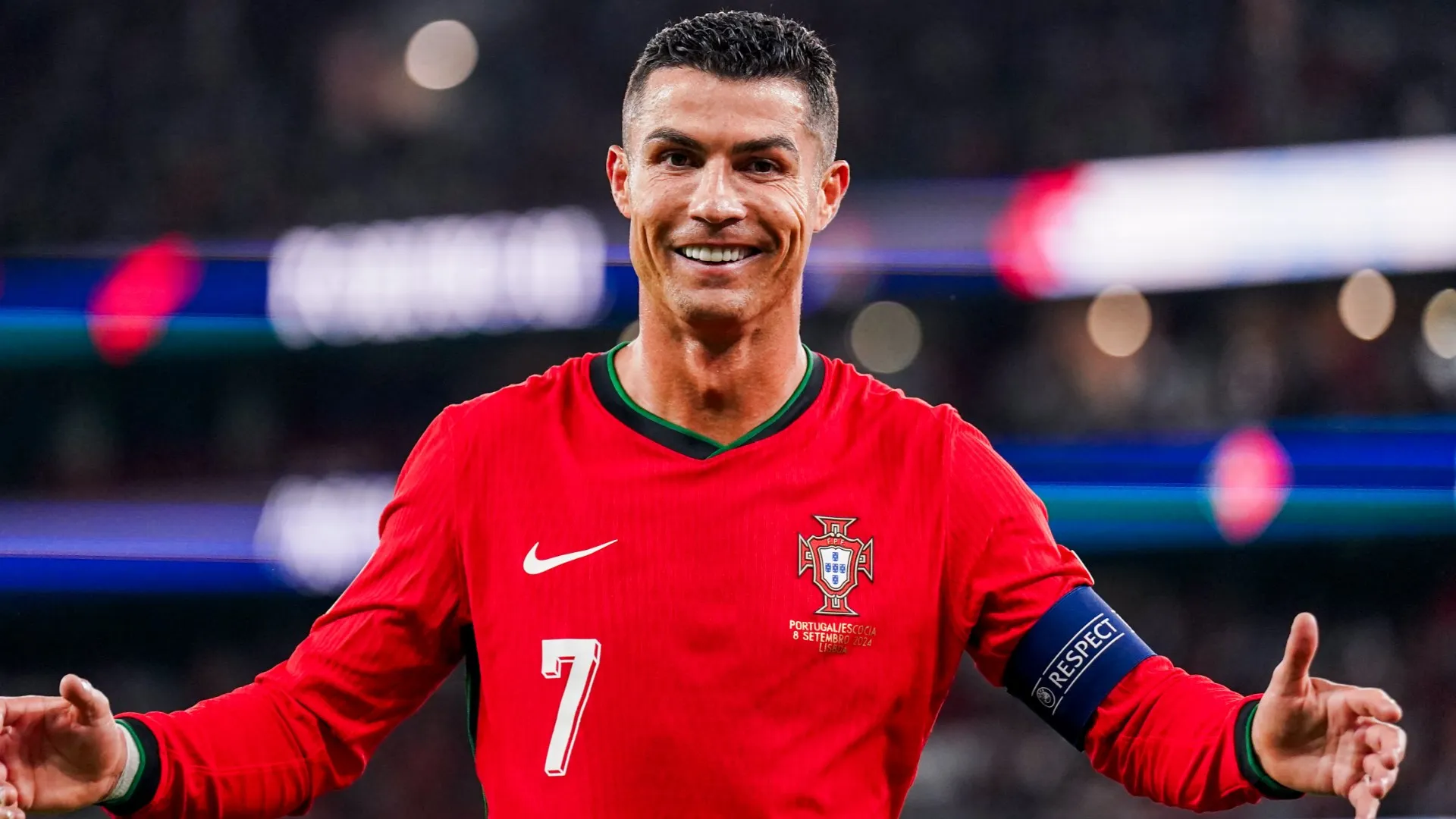
1,032 views
A standard Cristiano Ronaldo biography often runs into the same problem: it freezes a moving career. The familiar version ends at Real Madrid, Juventus, or his move to Saudi Arabia, then treats the rest as an afterthought.
That approach is already dated.
This updated profile takes a different route. Rather than repeating the basic biography already published in Wiki Archives' biographical collection, it focuses on the later-stage reinvention of Cristiano Ronaldo, the records that define his historical position, and the family and legacy questions surrounding the final stretch of a career that has lasted more than two decades.
The numbers are still changing.
Quick facts: Cristiano Ronaldo at a glance
Detail | Information |
|---|---|
Full name | Cristiano Ronaldo dos Santos Aveiro |
Born | February 5, 1985 |
Birthplace | Funchal, Madeira, Portugal |
Height | 1.87 m |
Position | Forward |
Nationality | Portuguese |
Professional debut | Sporting CP, 2002 |
Major clubs | Sporting CP, Manchester United, Real Madrid, Juventus, Al-Nassr |
Major individual award | 5 Ballon d'Or awards |
Portugal milestone | Men's international appearance and goal records |
Family | Father of five children |
The headline facts are impressive. The more interesting part is how Ronaldo accumulated them.
He did not remain the same player.
From Madeira to Manchester: the first version of Ronaldo
Ronaldo was born in Funchal on the Portuguese island of Madeira and moved to mainland Portugal as a teenager to develop at Sporting CP. That decision was the first major break in his biography: leaving home at 12 was difficult, but Sporting's academy provided the environment that turned raw speed and technical confidence into professional potential.
His senior breakthrough came in 2002.
Manchester United signed him in 2003 after a Sporting performance caught the attention of Sir Alex Ferguson. At Old Trafford, Ronaldo was initially known as an explosive wide player who dribbled constantly, took risks, and occasionally frustrated teammates and supporters by trying one trick too many.
That version didn't last.
By the 2007–08 season, he had become football's most dangerous all-purpose attacker. He scored 42 goals in all competitions as Manchester United won the Premier League and UEFA Champions League, and he later collected his first Ballon d'Or.
The transformation mattered because it established the pattern that would define his career: identify the next weakness, rebuild the game, repeat.
Real Madrid: where the records accelerated
Ronaldo joined Real Madrid in 2009 for a then-world-record transfer fee. The pressure was enormous. So was the output.
Over the following nine seasons, he developed from an elite winger into a highly optimized goal scorer. His movement became more economical. His positioning inside the penalty area improved. He attacked crosses with extraordinary timing and gradually reduced the amount of unnecessary dribbling.
The results were absurd.
Ronaldo scored 450 goals for Real Madrid, becoming the club's all-time leading scorer. His partnership with Karim Benzema, Gareth Bale, Luka Modrić, Toni Kroos, and other elite teammates helped Real Madrid dominate the Champions League during the 2010s.
Four Champions League titles arrived during his Madrid spell.
His 2013–14 campaign remains particularly significant: UEFA credits Ronaldo with 17 goals in a single Champions League season, still the competition record. He also finished as the tournament's top scorer in seven different seasons.
This was Ronaldo at maximum volume.
Yet his greatest strength was not simply scoring more than everyone else. It was sustaining elite production through tactical changes, managerial changes, and changing physical demands.
The career timeline, without the usual shortcuts
Here is the compressed version of a very long journey:
2002–2003: Sporting CP — senior debut and rapid rise.
2003–2009: Manchester United — three Premier League titles, a Champions League, and his first Ballon d'Or.
2009–2018: Real Madrid — 450 goals and four Champions League titles.
2018–2021: Juventus — Serie A titles and another successful reinvention as a penalty-box-focused scorer.
2021–2022: Manchester United return — a productive individual scoring return in a turbulent team environment.
2023 onward: Al-Nassr — the next phase, with Ronaldo becoming the most visible international football star in the Saudi Pro League.
Portugal throughout — a national-team career extending across multiple generations.
That timeline is straightforward. The final chapters are not.
As of UEFA's July 2026 update, Ronaldo held the men's records for 233 international appearances and 146 international goals, while also becoming the first male player to score in six World Cup final tournaments.
Reuters reported in August 2026 that Ronaldo had indicated the coming year could be his final season, although his exact retirement timing remains his decision.
So any modern Ronaldo biography has to leave room for one more twist.
Why the Champions League record book still matters
Ronaldo's Al-Nassr career changed his weekly competitive environment, but it did not erase what he built in Europe.
UEFA's records list places him among the competition's defining figures:
140 Champions League goals
183 Champions League appearances
67 knockout-stage goals
17 goals in the 2013–14 season
Five Champions League final victories
Goals in three Champions League finals
Numbers like these can become strangely abstract after years of repetition.
Try viewing them another way.
A player can have one extraordinary Champions League campaign and become a legend. Ronaldo repeatedly produced elite campaigns across Manchester United, Real Madrid, and Juventus. At Madrid alone, he scored 105 Champions League goals in 101 appearances, according to UEFA's competition breakdown.
That ratio explains a large part of his legacy.
Portugal, frustration, and the breakthrough
Ronaldo's international career has not been a smooth victory parade.
Portugal lost the Euro 2004 final on home soil. Ronaldo experienced World Cup disappointments and years in which his individual reputation seemed larger than the national team's achievements.
Then came Euro 2016.
Portugal defeated France in the final to win the country's first major international trophy. Ronaldo left the match injured, but his importance to Portugal's campaign and the emotional significance of the victory became part of the defining imagery of his career.
UEFA's updated records also credit him with 14 goals at EURO final tournaments, 55 EURO goals including qualifying, and six EURO final-tournament appearances.
Longevity, again.
Different teammates. Different managers. Same No. 7.
Family life beyond the stadium
Ronaldo's public life is unusually visible, yet parts of his family life remain deliberately private.
He is the father of five children: Cristiano Ronaldo Jr., twins Eva Maria and Mateo, Alana Martina, and Bella Esmeralda. His relationship with Georgina Rodríguez has become a prominent part of his later public story.
In August 2026, reports described Ronaldo and Rodríguez as having held a private civil wedding ceremony in Portugal with their children present.
The broader family story also includes Ronaldo's mother, Maria Dolores Aveiro, and his siblings, Hugo, Elma, and Katia. His father, José Dinis Aveiro, died in 2005, before Ronaldo reached the absolute peak of his career.
That timing is easy to overlook in a trophy list. It is part of the biography, though. Records tell you what happened. Family history often explains why certain moments carried unusual weight.
The CR7 legacy is bigger than football
The Ronaldo legacy has three distinct layers.
The athlete
His physical preparation, dietary discipline, recovery habits, and willingness to adapt helped establish a modern model for career longevity. Young players copied the visible parts—gym work, abs, sprint training—while sometimes missing the less glamorous element: relentless repetition.
That's the annoying bit.
The spectacular bicycle kick gets millions of views. The repetitive training sessions behind it don't.
The competitor
Ronaldo's career is inseparable from ambition. He has openly pursued goals, records, awards, and historical status rather than pretending those things do not matter.
That attitude has critics.
It also made him compelling.
The global brand
CR7 became a commercial identity spanning football, fashion, hospitality, fitness, and social media. For Wiki Archives readers, this makes Ronaldo more than a sports biography subject; he is also a useful case study in how a modern public figure can build a recognizable identity that survives club changes and, eventually, retirement.
The badge changed.
The personal brand stayed.
The records most likely to define Cristiano Ronaldo's historical ranking
Debates about the greatest footballer will continue forever. They should. Football arguments are part of the sport.
Still, Ronaldo's strongest case rests on measurable achievements:
Record or milestone | Current significance |
5 Ballon d'Or awards | Places him among football's most decorated individuals |
5 Champions League titles | Won with Manchester United and Real Madrid |
140 Champions League goals | UEFA's all-time leading total |
17 goals in one Champions League season | Competition record |
233 Portugal appearances | UEFA's listed men's international record as of July 2026 |
146 international goals | UEFA's listed men's international scoring record as of July 2026 |
Goals at six World Cups | A unique longevity milestone |
The exact totals in an active player's biography require regular checking. That's especially true near the end of Ronaldo's career, where every appearance or goal can move another record.
What happens after the final match?
Ronaldo has spent most of his adult life inside professional football. Retirement will therefore be less like closing a chapter and more like changing operating systems.
The habits remain. The competition doesn't.
Reuters reported that he has spoken about wanting a meaningful life after football, with interests including travel, family time, and padel, while also describing his desire to leave behind a spectacular legacy.
That raises a fascinating question: can a player whose career was built on measurable milestones accept a future in which there is no next goal to chase?
We'll find out.
Frequently asked questions
How many Ballon d'Or awards has Cristiano Ronaldo won?
Cristiano Ronaldo has won five Ballon d'Or awards, making him one of the most decorated individual players in football history.
How many Champions League goals has Ronaldo scored?
UEFA lists Ronaldo with 140 UEFA Champions League goals, the all-time record, along with 183 appearances in the competition.
Who are Cristiano Ronaldo's children?
He has five children: Cristiano Ronaldo Jr., Eva Maria, Mateo, Alana Martina, and Bella Esmeralda.
What is Cristiano Ronaldo's most successful club?
By volume of goals and major European achievements, Real Madrid was the defining club phase of his career. He scored 450 goals for the Spanish side and won four Champions League titles there.
Is Cristiano Ronaldo retired?
No final retirement date should be assumed until Ronaldo officially announces it. In August 2026, however, he indicated that the coming season could be his last in professional football.
The legacy is still being written
The temptation is to file Cristiano Ronaldo neatly into football history already: Madeira, Manchester, Madrid, Turin, Riyadh; goals, trophies, records, brand.
Too neat.
His biography is approaching its final professional chapter, but the archive is not closed. Check the latest match totals, international milestones, and retirement news rather than relying on an old snapshot—because with Ronaldo, one more record has always been a very realistic possibility.
Cristiano Ronaldo biography
football legend
sports career timeline
athlete biography
Ronaldo records
Found this helpful? Share it!